/
Data Center Ballistic Protection: Layered Defense for Resilient Critical Digital Infrastructure
August 1, 2026
Data Center Ballistic Protection: Layered Defense for Resilient Critical Digital Infrastructure
Data center ballistic protection now falls under EU CER and 2024 UK CNI rules. STANAG 2280 and RC6 hardening keep critical services online.
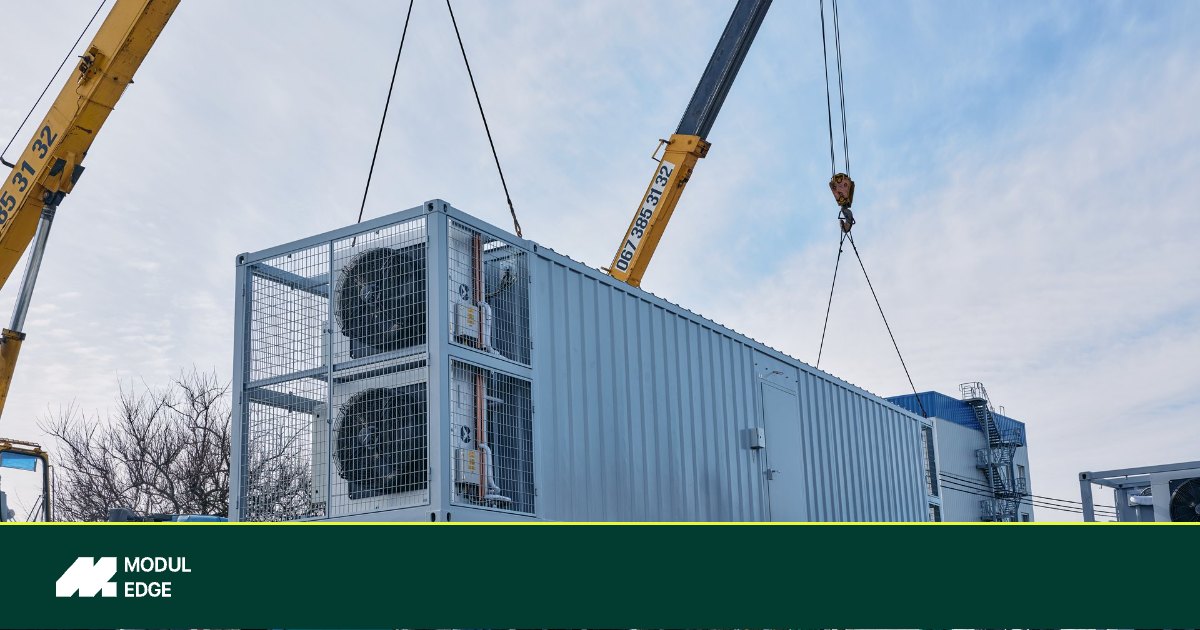
Data center ballistic protection is the set of design measures, including hardened envelopes, resistance-rated glazing and doors, and room-specific blast and fire separation, that keep a facility running after a kinetic incident instead of after a fire drill. The UK designated data centres as Critical National Infrastructure in September 2024, and the EU’s Critical Entities Resilience Directive (2022/2557) requires member states to formally identify critical entities, including digital infrastructure operators, by 17 July 2026. In the Baltic Sea alone, at least three undersea cable or power-link incidents were recorded between November 2024 and January 2025, prompting NATO to launch its Baltic Sentry patrol mission.
This post covers why civilian facilities now sit on the same regulatory register as ports and power grids, what a realistic physical threat picture looks like for a bank’s or hospital’s data hall, how layered protection is designed room by room, which standards define the resistance ratings engineers actually specify, why the Baltics face a sharper version of this problem, and why building protection in at the factory beats retrofitting it later.
Why Are Civilian Data Centers Now Classified as Critical Infrastructure?
Most facility managers still treat a data center’s threat register as an insurance formality: fire code, flood zone, maybe a terrorism rider nobody expects to use. That assumption stopped holding up around 2024, when data centers stopped being grouped with office buildings and started being grouped with substations, ports, and hospitals.
On 12 September 2024, UK Technology Secretary Peter Kyle designated data centres as Critical National Infrastructure, the first new CNI sector added since Space and Defence in 2015 (GOV.UK, 2024). The designation covers physical facilities and the cloud operators that depend on them, and it triggers coordinated government incident response along with prioritized access to the National Cyber Security Centre and emergency-service coordination. That’s a materially different posture than a recommendation to buy better cameras.
The EU took a parallel, broader path. The Critical Entities Resilience Directive, known as CER (Directive 2022/2557), folds digital infrastructure into eleven regulated sectors alongside energy, transport, banking, health, and water (EUR-Lex, 2022). Member states transposed CER into national law by 17 October 2024. They now have until 17 July 2026 to identify which entities in each sector qualify as critical, after which a designated operator has roughly ten months to meet resilience obligations that explicitly cover physical protection, not only cybersecurity.
The practical effect: a data center run for a regional bank or a public hospital network can now land in the same regulatory conversation as a nuclear plant or an airport, without ever hosting a defense contract. Nothing about the mission changed, only the classification. The building still just has to stay up. For the fuller regulatory picture arriving alongside CER, covering energy rules, sovereignty requirements, and reporting thresholds, see ModulEdge’s overview of EU data center regulations through 2026.
What Physical Threats Does Data Center Ballistic Protection Actually Address?
Civilian data centers don’t face military threats. They face a narrower, still serious set of kinetic and forced-entry scenarios that European governments have started naming explicitly since 2024.
The taxonomy breaks into five categories. The base case, the one most standards are built around, is small-arms fire: a handgun or rifle round at a perimeter fence, a guard post, or a ground-floor window. Blast and vehicle-borne threats range from a parked vehicle carrying an improvised device to a nearby industrial accident, and loading docks and vehicle access points carry the highest exposure. Forced entry is simpler. It covers burglary-grade attacks with crowbars, angle grinders, or drills against doors, windows, and roof hatches.
Drone and loitering-munition threats are the newest addition to civilian risk models, and they’re not speculative. Sustained FPV drone and loitering-munition strikes against transformer substations and district heating nodes during the Russia-Ukraine war have shown how cheaply that kind of strike can be executed. Vehicle ramming, distinct from a vehicle-borne device, is a blunt-force attack on gates, bollards, or building corners.
None of these require a state actor. A contractor with bolt cutters, a ram-raid crew after copper, and a hobbyist drone flown too close to a substation fence are all civilian-grade incidents that hardening standards are written to survive. The design question isn’t whether a facility could survive a war. It’s whether the facility survives the ordinary Tuesday incident that regulators are now required to plan for.
What Does Layered, Room-by-Room Protection Look Like Inside a Data Center?
The typical physical security conversation stops at cameras and a badge reader. That covers unauthorized entry, and nothing else. Not a vehicle-borne device at the loading dock, not a rifle round through a control-room window, not a strike on a rooftop generator enclosure.
Defense-in-depth design closes that gap by treating a facility as concentric zones, each with its own threat profile and its own spec, rather than a single fence line and a single door rating. Borrowed from the layered model used in cybersecurity, the principle is simple: no single control has to hold perfectly. If the perimeter is breached, the envelope holds. If the envelope is breached, the critical room holds.
Three zones matter most in a civilian facility. The perimeter is where hostile vehicle mitigation, meaning bollards and barriers crash-rated to standards like the UK’s PAS 68 or the newer ISO 22343, keeps a vehicle-borne threat far enough back that blast overpressure drops to a survivable level before reaching a wall. The envelope is the building skin itself, the walls and doors and windows, where ballistic-rated glazing, forced-entry-rated doors, and reinforced wall assemblies carry the load. A ground-floor window facing a public road is a different risk than an internal server-room partition. The two should never share a spec.
Critical rooms are where a breach actually costs uptime — the control room, the battery and UPS room, the generator enclosure, the main distribution frame. These often need two properties in the same wall assembly. A control room may need ballistic and fire resistance together, because an attack and a fire are both plausible failure modes for the same room. See ModulEdge’s guide to data center fire suppression design for how fire-rated compartmentalization gets specified independent of ballistic load. A battery or generator room typically needs blast resistance and fire separation together, since thermal runaway and vehicle-borne threats both concentrate at the same fuel- and power-dense location.
Which Standards Define Data Center Ballistic Protection and Resistance Classes?
Engineers specifying protection for a civilian facility draw from a handful of standards, and knowing what each one measures matters more than knowing its name.
NATO STANAG 2280 defines test procedures and classification for the effects of weapons (ballistic, fragmentation, vehicle-borne, and blast) on structures. It was written for temporary military protective structures. Civilian specifiers reference it anyway, because it evaluates combined threats in one framework instead of testing ballistic and blast performance separately.
The glazing standards split by geography, and the split matters. EN 1063, the European bullet-resistant glazing standard, defines seven levels for small-arms fire plus two shotgun-specific classes, all tested at a single ambient temperature. One condition, one pass. UL 752, the American standard widely used for doors, windows, and partitions, asks more of a product. It runs ten levels, from common handgun rounds up through armor-piercing rifle rounds, and requires multiple samples tested across a range of temperatures, which makes it a more demanding qualification path than EN 1063’s single-condition test. NIJ standards get applied to building materials too, though they were developed for law-enforcement body armor: four main levels plus two sub-levels, six rankings in total.
Forced entry is its own discipline, governed in Europe by EN 1627, which sets six Resistance Classes (RC1 through RC6) for doors, windows, and shutters. RC2 is the baseline for a standard commercial building, and RC3, which resists crowbars and drills, suits higher-risk sites. RC5 and RC6 assume an attacker with power tools and enough time to use them — the rating typically reserved for a data center’s core network room or vault-grade spaces.
None of these standards were written with data centers in mind, and that is worth saying plainly. The specifier’s job is translating military and commercial security ratings onto a facility where the asset at risk is uptime, not people or cash.
Why Does Data Center Hardening Carry More Weight in the Baltics and Northern Europe?
Proximity, mostly, plus a documented pattern of incidents regulators can point to instead of hypothesize about.
Two submarine cables, the BCS East-West Interlink and the C-Lion1, were damaged within a day of each other in the Baltic Sea on 17-18 November 2024, an event Western officials characterized as probable sabotage rather than accidental anchor drag (Atlantic Council, 2025). The following month it was the Estlink 2 power cable. Then, on 26 January 2025, a fiber link between Latvia and the Swedish island of Gotland failed, triggering a NATO and police investigation. NATO answered by standing up Baltic Sentry, a naval patrol mission focused specifically on undersea infrastructure.
The pattern isn’t limited to cables. Novaya Gazeta Europe documented at least 24 drone incidents across Latvia, Lithuania, and Estonia since the start of 2025, and Baltic airspace incursions have kept climbing into 2026, including the first instance of a NATO aircraft downing a drone over Estonian territory. Further from the Baltic Sea, France saw its own coordinated fiber-optic sabotage during the 2024 Olympics: an attack on the night of 29 July cut telecom service across six departments, using nothing more sophisticated than an axe or an angle grinder.
None of this means a data hall in Riga or Vilnius needs a military spec. It means the region’s civilian critical-infrastructure operators (telecoms, utilities, financial institutions) are the ones actually living the CER Directive’s risk-based logic, where a threat assessment reasonably includes sabotage and drone incursion in a way that a facility in Lisbon or Milan may not need to weigh as heavily. Physical security for data centers in Europe is no longer one uniform spec sheet but an increasingly geography-adjusted exercise, and the Baltics sit at the sharper end of that curve.
Why Is Factory-Integrated Construction Better Suited to This Than Site Retrofits?
Retrofit projects tend to treat hardening as an afterthought: ballistic film applied to existing glass, a blast wall built around a generator pad after the generator is already running. That approach can work. It’s also provably harder to verify after the fact than protection engineered into the structure from the start, which is the part that matters once a regulator or an insurer asks for the test evidence.
Factory-integrated modular construction reverses the sequence. Wall panels, door assemblies, and glazing are fabricated to a specified resistance class, whether EN 1063, UL 752, STANAG 2280, or an EN 1627 RC rating, before a module ever leaves the production line. The ballistic or blast performance of a wall gets tested on an identical panel in a controlled environment. It isn’t estimated from a datasheet applied on site by a contractor who may never have installed a rated assembly before.
It also solves the harder problem: rooms that need two properties at once, like a control room needing ballistic and fire resistance, or a battery room needing blast resistance and fire compartmentalization together. Reconciling those in a site-built retrofit means combining two separately sourced products after the fact, with the joints and penetrations as the weak point. In a factory-built module, the wall, door, and cable penetration details are engineered as one assembly and tested as one assembly, before the unit ships.
This is one input into a data center’s resilience profile, not the whole of it. Power architecture matters just as much as the envelope; so do redundancy and cooling. For the broader picture of how modular design handles continuity, see ModulEdge’s guide to data center resilience through modular infrastructure strategy, and for the fundamentals of the build method itself, ModulEdge’s modular data center guide.
Closing: Physical Hardening Is a Continuity Requirement, Not a Fortress Aesthetic
The regulatory shift running from 2024 through 2026 (UK CNI, EU CER, the national strategies due under it by January 2026) was never really about data centers as buildings. What it protects is the essential services that stop when the building does: a hospital’s patient records, a bank’s clearing system, a telecom’s call routing.
Ballistic and blast protection is one input into keeping those services running through an incident. It sits alongside the access control and network segmentation covered in ModulEdge’s guide to data center physical security, and the electromagnetic protection covered separately in ModulEdge’s piece on EMP protection for data centers. None of these disciplines substitute for the others.
Operators evaluating a new build or a major refit don’t need to solve every threat in the taxonomy on day one. They need an honest threat assessment, a standard that matches it, and a construction method that can prove the rating before the building is occupied, not after an incident forces the question. That is a lower bar than fortification, and one most civilian operators in Europe are now required to clear.
Frequently Asked Questions
What is data center ballistic protection? Data center ballistic protection refers to design measures, including resistance-rated glazing, doors, and wall assemblies, that allow a facility’s envelope and critical rooms to withstand small-arms fire, forced entry, and related kinetic threats. Specification typically follows standards such as EN 1063, UL 752, or NIJ ratings, with the level chosen from a site-specific threat assessment rather than a single default.
Are civilian data centers really at risk of ballistic or blast attacks? Documented incidents affecting European critical infrastructure since 2024, including Baltic Sea cable sabotage and repeated fiber-optic cable cuts in France, show that civilian digital infrastructure has already been targeted by kinetic and sabotage-style attacks. Regulators in the UK and EU responded by classifying data centers as critical infrastructure specifically because of this documented pattern, not a hypothetical one.
What is the difference between a blast-resistant data center and a hardened data center? “Hardened” is the broader term, covering ballistic, blast, and forced-entry resistance together across a facility’s envelope and critical rooms. “Blast-resistant” is narrower: it refers specifically to a structure’s ability to withstand overpressure from an explosion, one threat category within the broader hardening picture and most relevant to loading docks, generator rooms, and battery rooms.
What is the difference between EN 1063, UL 752, and NIJ ratings? EN 1063 is a European glazing standard with seven small-arms levels plus two shotgun classes, tested at ambient temperature only. UL 752 is an American building-materials standard with ten levels, tested across multiple samples and temperature conditions, making it a more rigorous qualification path. NIJ standards were developed for law-enforcement body armor and have four main levels plus two sub-levels; they’re sometimes applied to building products but weren’t designed for that purpose originally.
What does an RC6 rating mean for a data center door or window? RC6 is the highest class under the European forced-entry standard EN 1627. It indicates a door, window, or shutter assembly designed to resist an experienced attacker using power tools like grinders and drills for an extended period. In a data center it’s typically specified only for the highest-value spaces, such as a core network room or vault-grade enclosure, rather than the entire building envelope.
Why are data centers now classified as critical infrastructure in Europe? The UK designated data centres as Critical National Infrastructure in September 2024, and the EU’s CER Directive (2022/2557) places digital infrastructure among eleven regulated critical sectors, with member states required to identify critical entities by 17 July 2026. Both moves followed a documented rise in hybrid and physical threats to European infrastructure, including subsea cable damage and drone incursions near the Baltic Sea.
Does modular data center construction support ballistic and blast protection? Yes. Factory-integrated modular construction allows wall panels, doors, and glazing to be built and tested to a specified resistance class, such as EN 1063, UL 752, or an EN 1627 RC rating, before the module leaves the production line, rather than relying on a site-built retrofit assembled from separately sourced products.
How is ballistic protection different from EMP shielding for a data center? Ballistic and blast protection address kinetic threats, meaning projectiles, explosives, and forced entry, aimed at a facility’s structure. EMP shielding addresses electromagnetic threats that can disable electronics without any physical breach of the building, using a different design approach such as Faraday-cage enclosures. The two are separate disciplines specified independently, covered in more depth in ModulEdge’s EMP protection for data centers post.
